
Murphy Address History by Era
One Murphy address has several record layers, and none tells the whole story alone. County land records establish the transfer trail. CCAD connects a current address to the parcel description used to match older records. Directories, census material, newspapers, and obituaries add household context. The most dependable result is a sequence of dated records that agree on a name, location, and legal description rather than a single name returned by a search box.
| Source | Years it covers | Where held | What it shows |
|---|---|---|---|
| County Clerk official-record index | Current through 08/28/2026; historical service identified for 1843-1975 | Collin County Clerk public search | Grantor, grantee, instrument, recorded date, legal description, image route |
| CCAD property search | Current tax-year data, updated nightly | Collin Central Appraisal District | Property ID, geographic ID, owner, situs and mailing address, subdivision, legal description |
| McKinney directory | 1902 digitized; a 1922 holding is listed | UNT and TSLAC | Regional name, address, trade, and household notation |
| Dallas directories | 1875, 1878-79, 1880-81 through 1991, with gaps | TSLAC, UNT, and Dallas Public Library | Regional fallback, with no guaranteed Murphy inclusion |
| Murphy history collection | Roughly 1845-1945 | Dallas Public Library finding aid | Community and family papers in two boxes |
| Federal census | Public through 1950 | NARA and library databases | Household snapshot, not ownership proof |
| Plano Star-Courier | Displayed items from the 1900s-1980s | UNT and Plano Public Library | Regional social notices, obituaries, and local names |
The table shows why the trail starts with property facts but does not stop there. A transfer may record a trust, entity, easement, lien, or release instead of a change in who occupied a house. A census, directory, obituary, or probate file can add a separate household or family clue. Note: Record the date and source for every match before moving to the next owner.
Murphy Parcel Facts Start Here
The Collin Central Appraisal District property search is the start of the backward method. Search the Murphy address and save the owner as filed, property ID, geographic ID, situs address, mailing address, abstract or survey, subdivision, lot, block, and legal description. The data updates nightly and CCAD warns that it is research information, so verify a legal description and acreage when a formal record matters.
Keep the address layers separate. A situs address identifies the physical parcel. A mailing address says where notices go and can point to a trust, business, tax agent, or former address. The legal description and parcel identifiers are the stable bridge when a street is abbreviated, changes form in an old source, or covers several similar lots. CCAD's owner data can be a strong starting fact, but it does not prove who lived there on a particular date.
| Owner name | The name used to begin a grantee or general search in the Clerk index. |
|---|---|
| Property ID | A CCAD parcel reference to save with the address search. |
| Geographic ID | A mapping-oriented identifier that helps compare parcel records. |
| Legal description | The abstract, survey, subdivision, lot, block, or tract wording used to match a deed. |
| Situs and mailing | Two distinct address fields that should not be treated as the same fact. |
Murphy Deed Chain Backward
The Collin County Official Public Records Search is where the parcel facts become a deed trail. Search the present owner as a grantee, or use a general search term, narrow the property category and date, sort by recorded date, and compare each candidate's legal description with the CCAD record. The purchase document identifies a seller or grantor. Search that seller in earlier records, make the same comparison, and repeat the sequence.
- Save the CCAD owner, parcel identifiers, and full legal description for the Murphy address.
- Search the owner as grantee or with a general term in the Clerk index.
- Narrow by property and date, then sort by recorded date.
- Open the candidate record and match its legal description to the same parcel.
- Use the seller or grantor from that transfer for the preceding search.
- Repeat with name variants, middle initials, trusts, and entities where the record calls for them.
- Grantor
- The party transferring an interest in a recorded instrument, often the seller in a deed.
- Grantee
- The party receiving an interest, often the buyer identified by a deed.
- Chain of title
- The linked sequence of transfers for the same parcel, tested by dates and legal description.
- Legal description
- The parcel wording that connects a deed to a lot, block, subdivision, abstract, survey, or tract when street text is uncertain.
Murphy Records Need Dates
Collin County identifies the online index as certified through 08/28/2026. Its land-record instructions direct researchers to Historical Records for 1843-1975. That is a service route, not proof that every older image appears in the same current screen or that one book cutoff applies to every record. The exact historical screen and book or volume boundary were not established in the research. When the online result stops, ask the Clerk about its historical route, counter assistance, or a written search rather than filling a gap with a guess.
The index can expose an image route. Research notes that an unofficial watermarked image may be available, while a clean copy requires registration, cart checkout, and payment. The county's land-record search instructions explain the official search and historical paths. Check document type closely: a lien, release, foreclosure, easement, or partial-interest filing may name the parcel but not transfer its full title.
TSLAC's city-directory guidance is the source for this historical-collection image.
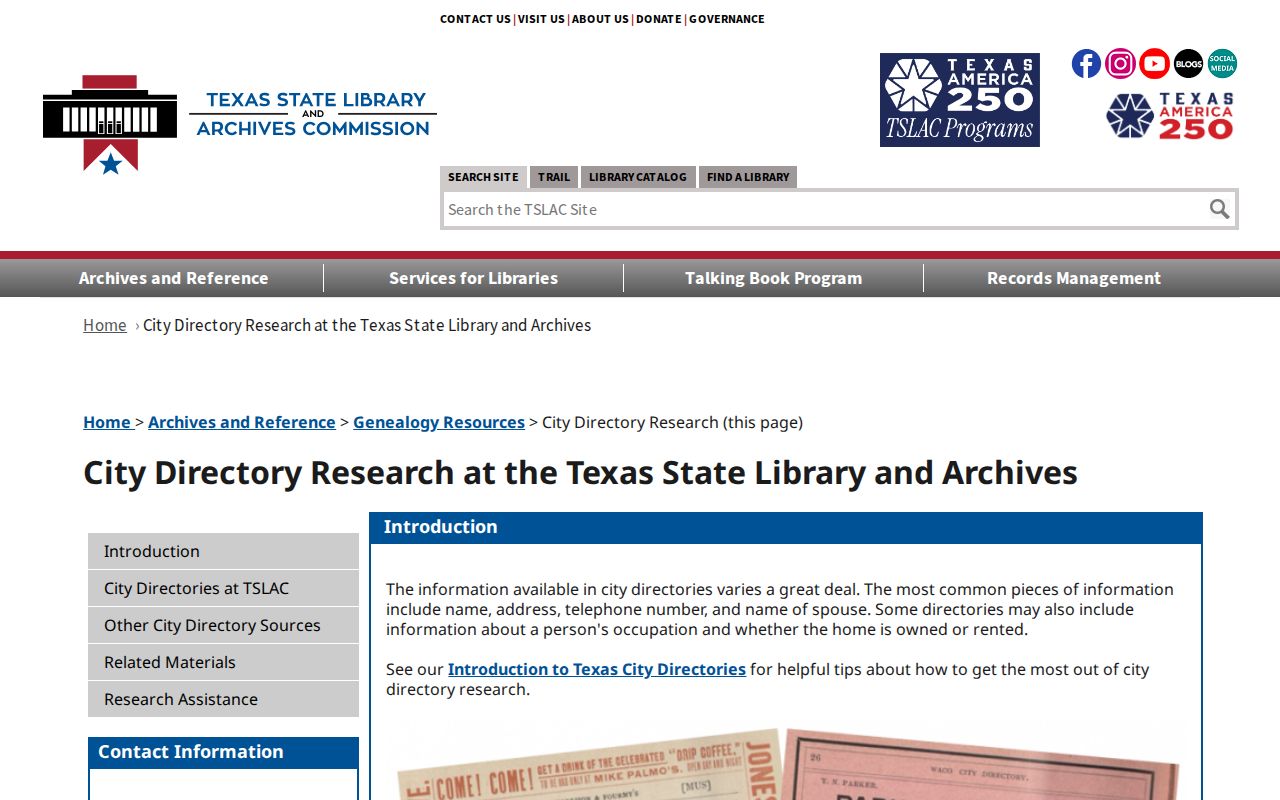
The state-library route is useful when the deed trail needs a dated household clue from a regional directory.
Murphy Address Forms Change
No official Murphy street-renumbering or citywide street-renaming project was located. Do not invent one when an old directory spells a street differently or uses a short form. Instead, bridge the records with the legal description, subdivision, lot and block, abstract or survey, nearby cross streets, and a parcel map. The Murphy subdivision map and the county GIS address-point and appraisal layers can help compare an older form with the parcel geography.
Plats can supply another link. In the Clerk portal, look under Property Records and search for a subdivision name, then match the lot and block with CCAD. A plat maps subdivision layout and recording references; it does not identify an earlier household. If a record is hard to place, the county GIS services provide parcel, subdivision, abstract, ZIP, boundary, and address-point layers. Note: A matching legal description is stronger than a similar-looking street name.
Murphy Historical Household Records
Ownership is only one part of the story. The 1902 McKinney directory is the nearest actual digitized regional model, and TSLAC lists a 1922 McKinney holding. Dallas volumes can be a wider fallback. These sources can show a name, address, trade, and shorthand such as r. for residence or bds for boarding, but no dedicated Murphy reverse directory has been confirmed. The historical shelf and entry-reading details are collected on the Murphy city directories page.
A practical household flow is address to legal description, then deed chain, then directory year, then census year, then obituary or probate evidence. The federal census is public through 1950. It captures a household at one point in time and should not be treated as a deed. Search one or two years around a directory hit, use name and spouse variants, and note whether the record says resident, boarder, or householder.
- Use the deed date to choose a likely directory or census interval.
- Search the surname, street, and spelling variants in the regional directory source.
- Read the scanned page and its abbreviation key, not only the OCR result.
- Compare the person, household role, and location with the closest public census.
- Return to the deed chain if the address or legal description does not agree.
UNT's actual 1902 McKinney directory page is the source for this historic-entry image.
The compact entry shows why an old household notation should be paired with a date, page image, and parcel evidence.
Murphy Previous Residents Trail Endpoints
An obituary, probate file, or later conveyance can close a trail when a person disappears from a directory or a parcel changes hands after a death. Plano's Haggard Genealogy Center offers HeritageHub remotely with a current library card, including obituary and death-notice images, while Ancestry Library Edition is described as available in the library. The Plano Star-Courier collection offers a free regional newspaper route. None of these sources alone proves that someone lived at the address, but their dates can explain a transition in the land records.
Probate is a separate county court pathway. Research documents county probate public computers and paper-file appointments. For family links, FamilySearch lists Collin County marriage records from 1846 to 1913 and indexes through 1977, and Texas DSHS offers a marriage-index route for 1966-2011. A marriage index is a name-and-date clue, not a probate file or deed. Murphy permits can date work on an address, but the city portal is contractor-oriented and its historic completeness is not stated.
Murphy Previous Residents, Lawful Research
Historic address research fits family history, house history, estate questions, and personal curiosity. It also has firm limits. City utility customer names are not public, and a mailing field is not proof that a person was at the property. Protected voters, sealed records, private household members, and confidential information remain outside a lawful address trail. Do not use a historic address search to stalk, harass, or harm anyone.
A blank result can reflect protected information, an old-image gap, a name variation, or a source that never recorded a household fact. It does not support an inference about any private household member.